Wired Lightning Earbuds for iPhone
Official Store Deal
Expert Analysis Overview
Sonic Fidelity on a Budget: An Audiophile's Perspective
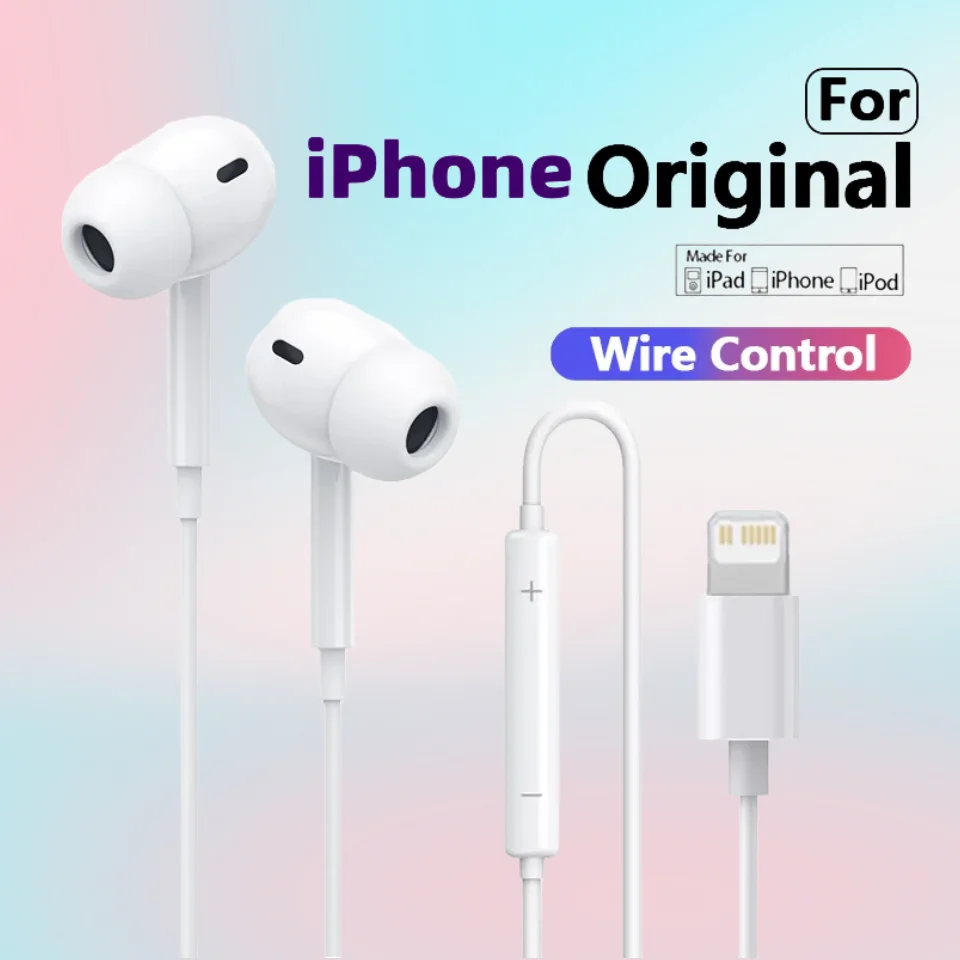
The Wired Lightning Earbuds for iPhone represent a budget-conscious audio solution tailored for Apple device users. This accessory aims to deliver a functional listening experience, leveraging the ubiquitous Lightning port for connectivity. Its design cues are clearly inspired by Apple's own EarPods, offering a familiar aesthetic and form factor.
The product images highlight claims of "Hi-Fi Sound Quality" and the ability to "Restore Original Sound," suggesting an emphasis on audio clarity and faithful reproduction. A high-resolution composite diaphragm is specified, intended to provide deep bass and clear treble. These are bold claims for an earbud in this price segment. The acoustic chamber design, visible in exploded diagrams, appears to utilize multiple vents and a driver assembly that aims for a balanced sound profile. Sound reproduction is a complex science. The physical construction suggests an attempt at broad frequency response.
For the discerning audiophile, the term "Hi-Fi" often implies specific technical benchmarks, such as a wide frequency range, low distortion, and a high signal-to-noise ratio. While these earbuds aim for an enhanced listening experience compared to generic alternatives, they operate within the inherent limitations of their price point and connection method. True studio-quality sound typically demands dedicated external digital-to-analog converters (DACs) and amplifiers, which are not integrated here. The sound profile is likely tuned for general consumer enjoyment rather than critical listening.
The Unbroken Connection: Lightning's Audio Path
Connectivity is a central aspect of these earbuds, featuring a Lightning connector for direct integration with compatible iPhones. The product explicitly mentions "Strong compatibility" and connection "through pop-up," with "no iOS system version restrictions." This "Bluetooth Pop-Up Mode" is a crucial detail for understanding the audio signal path. It indicates that, despite the physical Lightning connection, the audio signal is likely transmitted via an embedded Bluetooth chip within the cable or connector. This is a common method for non-MFi (Made for iPhone) accessories to function with Apple devices, bypassing strict digital audio protocols.
This connection method means the iPhone treats the earbuds as a Bluetooth accessory, prompting a pairing pop-up upon insertion. Audio is then streamed wirelessly (via Bluetooth) to the embedded chip, which subsequently converts it to analog for the earbud drivers. This approach offers broad compatibility across iOS versions. It simplifies the manufacturing process. However, it introduces the inherent limitations of Bluetooth audio codecs, typically SBC or AAC, which involve compression. This compression can subtly impact the fidelity of the audio signal, even if the physical connection is wired. The convenience is undeniable.
Unlike a true digital Lightning audio accessory that would leverage the iPhone's internal DAC or an MFi-certified external DAC, these earbuds rely on their internal Bluetooth-enabled DAC. This design choice affects the potential signal-to-noise ratio (SNR) and overall audio resolution. High-impedance headphones, which demand significant power, would not be adequately driven by this setup. The output power is optimized for the integrated drivers. Lossless playback, while theoretically possible from the source, would be downsampled by the Bluetooth codec before reaching the earbud's DAC. This is a practical trade-off.
Ergonomics and Enduring Design
The physical design of these earbuds is described as "Delicate Design" and features a "45° In-ear Design" for a "Perfect Fit." This angled eartip approach is common in modern earbud ergonomics, aiming to provide a more secure and comfortable fit within the ear canal. The white color scheme and overall form factor closely mimic Apple's iconic EarPods, offering a familiar aesthetic. Comfort is paramount for extended listening sessions.
The cable construction is highlighted as a "Durable TPE cable," with claims that its tensile strength is increased by 50%. Thermoplastic Elastomer (TPE) is a common material for earbud cables due to its flexibility, resistance to tangling, and reasonable durability. It offers a good balance between cost and performance. The cable can be divided or combined, suggesting a design that minimizes tangles when stored. This enhances portability. The material choice contributes to longevity.
Compared to older PVC cables, TPE offers superior flexibility and less prone to kinking. The 45° in-ear design, while not a universal fit for all ear anatomies, generally provides better passive noise isolation than traditional flat-head earbuds. This design choice enhances the listening experience in noisy environments. The overall build emphasizes practical durability for daily use. It's a thoughtful design for a budget product.
Intuitive Command and Control
Integrated "Wire Control" functionality is a key feature, allowing users to manage audio playback and calls without interacting directly with their iPhone. This inline remote typically includes buttons for volume adjustment, play/pause, and track skipping. Such controls are standard for wired earbuds. They enhance user convenience significantly.
The presence of physical buttons offers tactile feedback, which is often preferred over touch-sensitive controls, especially when on the move or in situations where visual confirmation is difficult. This allows for quick adjustments. Call management is also streamlined. The control module is positioned conveniently along the cable. This design choice prioritizes ease of use.
Unlike some minimalist designs that omit inline controls, these earbuds provide essential functionality at the user's fingertips. This feature aligns with the expectations for a modern portable audio accessory. It ensures a seamless interaction with media. The wire control is a practical addition.
Navigating the Wired Landscape
At a price point of approximately $2.96 USD, these Wired Lightning Earbuds for iPhone position themselves as an exceptionally affordable audio solution. This low cost makes them an accessible option for a wide range of users, whether as a primary pair of earbuds, a backup, or a replacement for lost or damaged originals. The value proposition is clear.
This cost-effectiveness means the "cost-per-use" becomes remarkably low, making them a practical choice for everyday listening without significant financial commitment. They serve as a straightforward alternative to more expensive wireless options or MFi-certified wired accessories. The affordability is a major draw. It removes barriers to entry.
Compared to premium audiophile-grade headphones or even mid-range wireless earbuds, these offer a no-frills, direct approach to audio. While they may not satisfy the most demanding listeners seeking pristine sound reproduction, they fulfill the fundamental need for personal audio on an iPhone. This product excels in its niche. It provides essential functionality at an unbeatable price.
Imagine effortlessly plugging into your iPhone, the familiar pop-up appearing for a quick connection, and then immersing yourself in your favorite podcasts or music during your daily commute. The lightweight design and comfortable fit mean you barely notice them, allowing you to focus on the audio experience. These earbuds integrate seamlessly into your mobile lifestyle, providing reliable sound for every moment, from a quick call to a long playlist. They are ready when you are, offering a simple, effective audio companion for your Apple device.