Wii2HDMI Adapter with 3.5mm Audio Output
Official Store Deal
Expert Analysis Overview
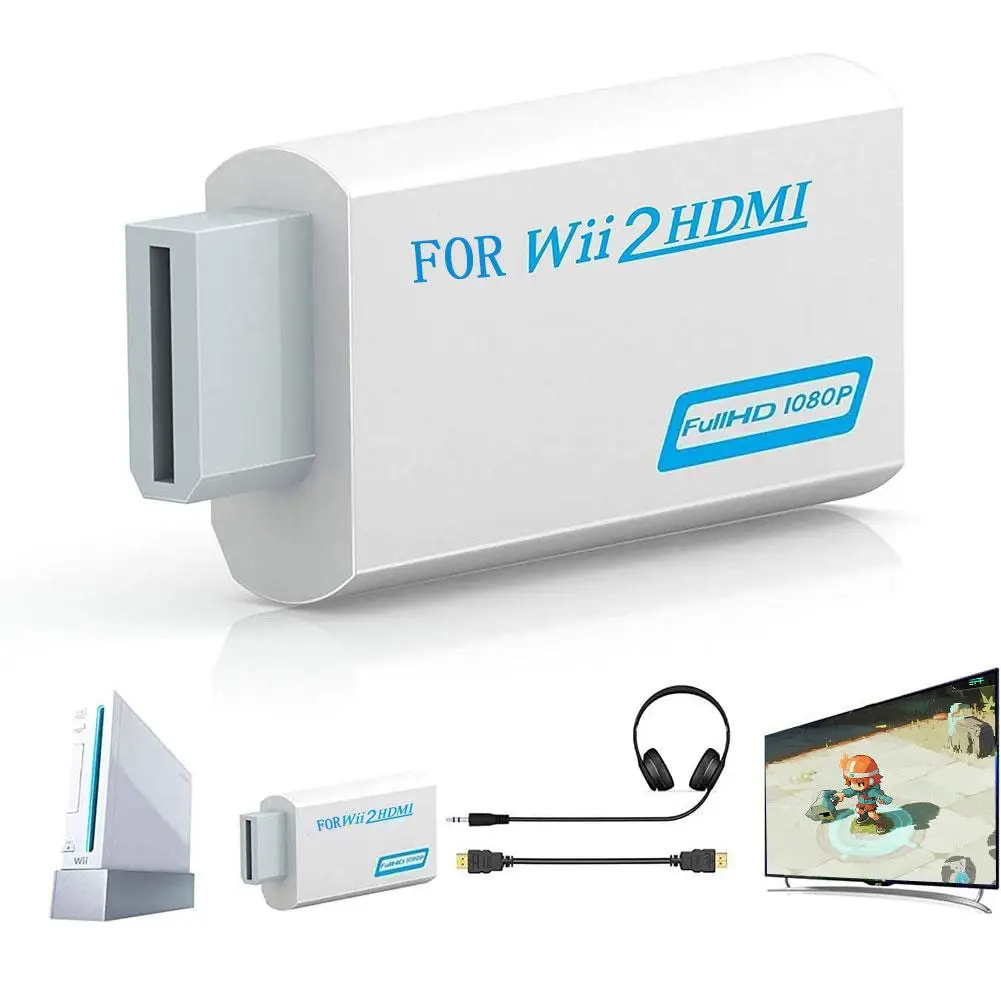
The Wii2HDMI Adapter is a pragmatic legacy bridge designed for enthusiasts seeking to connect their classic Nintendo Wii to contemporary high-definition displays. This device addresses a common frustration for gamers: the incompatibility of older console outputs with modern televisions that often lack analog inputs. The adapter provides a straightforward solution, converting the Wii's native analog signal into a digital HDMI format, ensuring continued enjoyment of a beloved console.
Modern televisions predominantly rely on HDMI for video and audio input. The Nintendo Wii, released in an era preceding widespread HDMI adoption for consoles, outputs video primarily through composite or component cables. This adapter acts as a crucial intermediary, translating the Wii's component video signal into a digital HDMI stream. It is a direct plug-and-play device.
This conversion process is essential for displaying Wii content on any HDTV or monitor lacking the necessary legacy analog ports. Without such an adapter, connecting a Wii to many newer displays becomes impossible, rendering the console unusable for many. The adapter ensures that the console's video output is compatible with current display technology.
Unlike direct analog connections that can suffer from signal degradation over longer cable runs, this digital conversion maintains signal integrity. Standard composite cables often introduce noticeable visual noise and color bleeding, particularly on larger screens. The adapter mitigates these issues by converting the signal to HDMI, which is inherently more resilient to interference.
This adapter is advertised to support 720p and 1080p output resolutions. It is important to clarify that the Wii's native maximum output resolution is 480p (NTSC) or 576p (PAL) via component cables. The adapter performs an upscaling function to reach 720p or 1080p. This is not a true native HD signal, but rather an interpolation of the original resolution.
The upscaling capability means that while the image will fill a modern HD screen, it will not magically transform into a high-definition game. Pixel density increases. The adapter aims to present the best possible image within the constraints of the Wii's original output. Expect a cleaner, sharper image than composite, but not a complete graphical overhaul.
Compared to simply stretching a 480p signal on an HDTV, which often results in a blurry and pixelated mess, the adapter's upscaling provides a more palatable viewing experience. It optimizes the image for the display's native resolution, reducing the jarring artifacts commonly associated with incorrect aspect ratio or resolution scaling. This is a significant improvement.
Beyond video, the adapter also handles audio conversion. It extracts the audio from the Wii's signal and embeds it into the HDMI stream. This allows for a single cable connection to the TV for both video and audio. A 3.5mm audio jack is also present.
This integrated audio solution simplifies setup considerably. Users avoid the need for separate audio cables or external audio extractors. The HDMI cable carries both signals, streamlining the connection to soundbars, home theater systems, or TV speakers. It is a clean setup.
For users with external audio systems or monitors without built-in speakers, the additional 3.5mm audio output is a critical feature. This allows for direct connection to headphones or external stereo speakers, providing flexibility in audio routing. This dual audio output capability is a distinct advantage over simpler converters.
The adapter's design emphasizes ease of use. It connects directly to the Wii's component video output port. No complex drivers or software installations are required. It is truly plug-and-play.
Operation involves connecting the adapter to the Wii, then an HDMI cable from the adapter to the display. A USB power source, typically a phone charger or a TV's USB port, is required for the adapter itself. This minimal setup ensures users can get their Wii running on a new TV within minutes. Setup is quick.
Unlike some more complex video processors that demand intricate calibration and menu navigation, this adapter offers a straightforward solution. Its simplicity makes it accessible to all users, regardless of technical proficiency. The design prioritizes immediate functionality over advanced, often confusing, customization options.
The adapter features a compact, white plastic housing. Its small footprint ensures it does not clutter the entertainment setup. The design is unobtrusive.
While the plastic construction is standard for such accessories, the visible build quality appears robust enough for its intended purpose. The direct-plug design minimizes cable clutter around the console. This compact form factor is ideal for tight spaces or portable setups. It is easily transportable.
Compared to bulkier converter boxes that require additional cables and space, this dongle-style adapter offers a more integrated and aesthetically pleasing solution. Its direct connection to the Wii reduces the number of components in the signal chain, potentially minimizing points of failure. The design is efficient.
The primary value of this adapter lies in its ability to extend the usability of the Nintendo Wii. Many users still possess a functional Wii console but struggle to connect it to modern displays. This adapter breathes new life into the console. It is a cost-effective upgrade.
Instead of investing in a new console or a vintage TV, this adapter offers a budget-friendly alternative. For a relatively low cost, users can continue to enjoy their Wii game library on their existing HDTV. This represents significant savings compared to replacing the console. The value is clear.
This adapter serves a crucial role for retro gaming enthusiasts and families who wish to revisit classic Wii titles. It ensures that the console remains relevant and playable in a rapidly evolving display technology landscape. The adapter preserves access to a unique gaming experience.
Imagine reconnecting with friends and family for a round of Mario Kart Wii or Wii Sports, projected crisply onto your living room's large screen. The adapter removes the technical barriers, allowing for seamless integration of your classic console into a modern entertainment system. It brings back the fun, without the hassle of searching for an old CRT TV or a compatible component input. This simple device ensures your treasured Wii memories can continue to be made, now with enhanced visual clarity on your current display technology.
Bridging Generations: Analog to Digital
Modern televisions predominantly rely on HDMI for video and audio input. The Nintendo Wii, released in an era preceding widespread HDMI adoption for consoles, outputs video primarily through composite or component cables. This adapter acts as a crucial intermediary, translating the Wii's component video signal into a digital HDMI stream. It is a direct plug-and-play device.
This conversion process is essential for displaying Wii content on any HDTV or monitor lacking the necessary legacy analog ports. Without such an adapter, connecting a Wii to many newer displays becomes impossible, rendering the console unusable for many. The adapter ensures that the console's video output is compatible with current display technology.
Unlike direct analog connections that can suffer from signal degradation over longer cable runs, this digital conversion maintains signal integrity. Standard composite cables often introduce noticeable visual noise and color bleeding, particularly on larger screens. The adapter mitigates these issues by converting the signal to HDMI, which is inherently more resilient to interference.
Visual Fidelity: The Conversion Process
This adapter is advertised to support 720p and 1080p output resolutions. It is important to clarify that the Wii's native maximum output resolution is 480p (NTSC) or 576p (PAL) via component cables. The adapter performs an upscaling function to reach 720p or 1080p. This is not a true native HD signal, but rather an interpolation of the original resolution.
The upscaling capability means that while the image will fill a modern HD screen, it will not magically transform into a high-definition game. Pixel density increases. The adapter aims to present the best possible image within the constraints of the Wii's original output. Expect a cleaner, sharper image than composite, but not a complete graphical overhaul.
Compared to simply stretching a 480p signal on an HDTV, which often results in a blurry and pixelated mess, the adapter's upscaling provides a more palatable viewing experience. It optimizes the image for the display's native resolution, reducing the jarring artifacts commonly associated with incorrect aspect ratio or resolution scaling. This is a significant improvement.
Audio Integration: Beyond the Visuals
Beyond video, the adapter also handles audio conversion. It extracts the audio from the Wii's signal and embeds it into the HDMI stream. This allows for a single cable connection to the TV for both video and audio. A 3.5mm audio jack is also present.
This integrated audio solution simplifies setup considerably. Users avoid the need for separate audio cables or external audio extractors. The HDMI cable carries both signals, streamlining the connection to soundbars, home theater systems, or TV speakers. It is a clean setup.
For users with external audio systems or monitors without built-in speakers, the additional 3.5mm audio output is a critical feature. This allows for direct connection to headphones or external stereo speakers, providing flexibility in audio routing. This dual audio output capability is a distinct advantage over simpler converters.
Installation Simplicity: Plug and Play
The adapter's design emphasizes ease of use. It connects directly to the Wii's component video output port. No complex drivers or software installations are required. It is truly plug-and-play.
Operation involves connecting the adapter to the Wii, then an HDMI cable from the adapter to the display. A USB power source, typically a phone charger or a TV's USB port, is required for the adapter itself. This minimal setup ensures users can get their Wii running on a new TV within minutes. Setup is quick.
Unlike some more complex video processors that demand intricate calibration and menu navigation, this adapter offers a straightforward solution. Its simplicity makes it accessible to all users, regardless of technical proficiency. The design prioritizes immediate functionality over advanced, often confusing, customization options.
Durability and Design: A Compact Solution
The adapter features a compact, white plastic housing. Its small footprint ensures it does not clutter the entertainment setup. The design is unobtrusive.
While the plastic construction is standard for such accessories, the visible build quality appears robust enough for its intended purpose. The direct-plug design minimizes cable clutter around the console. This compact form factor is ideal for tight spaces or portable setups. It is easily transportable.
Compared to bulkier converter boxes that require additional cables and space, this dongle-style adapter offers a more integrated and aesthetically pleasing solution. Its direct connection to the Wii reduces the number of components in the signal chain, potentially minimizing points of failure. The design is efficient.
Value Proposition: Extending Console Lifespan
The primary value of this adapter lies in its ability to extend the usability of the Nintendo Wii. Many users still possess a functional Wii console but struggle to connect it to modern displays. This adapter breathes new life into the console. It is a cost-effective upgrade.
Instead of investing in a new console or a vintage TV, this adapter offers a budget-friendly alternative. For a relatively low cost, users can continue to enjoy their Wii game library on their existing HDTV. This represents significant savings compared to replacing the console. The value is clear.
This adapter serves a crucial role for retro gaming enthusiasts and families who wish to revisit classic Wii titles. It ensures that the console remains relevant and playable in a rapidly evolving display technology landscape. The adapter preserves access to a unique gaming experience.
Imagine reconnecting with friends and family for a round of Mario Kart Wii or Wii Sports, projected crisply onto your living room's large screen. The adapter removes the technical barriers, allowing for seamless integration of your classic console into a modern entertainment system. It brings back the fun, without the hassle of searching for an old CRT TV or a compatible component input. This simple device ensures your treasured Wii memories can continue to be made, now with enhanced visual clarity on your current display technology.