USB 4-in-1/7-in-1 Hub with Individual Switches
Official Store Deal
Expert Analysis Overview
The USB 4-in-1/7-in-1 Hub is a strategically designed connectivity solution for users grappling with limited port availability and cable clutter on their workstations. This device addresses the common frustration of constantly plugging and unplugging peripherals, offering a streamlined approach to managing multiple USB devices.
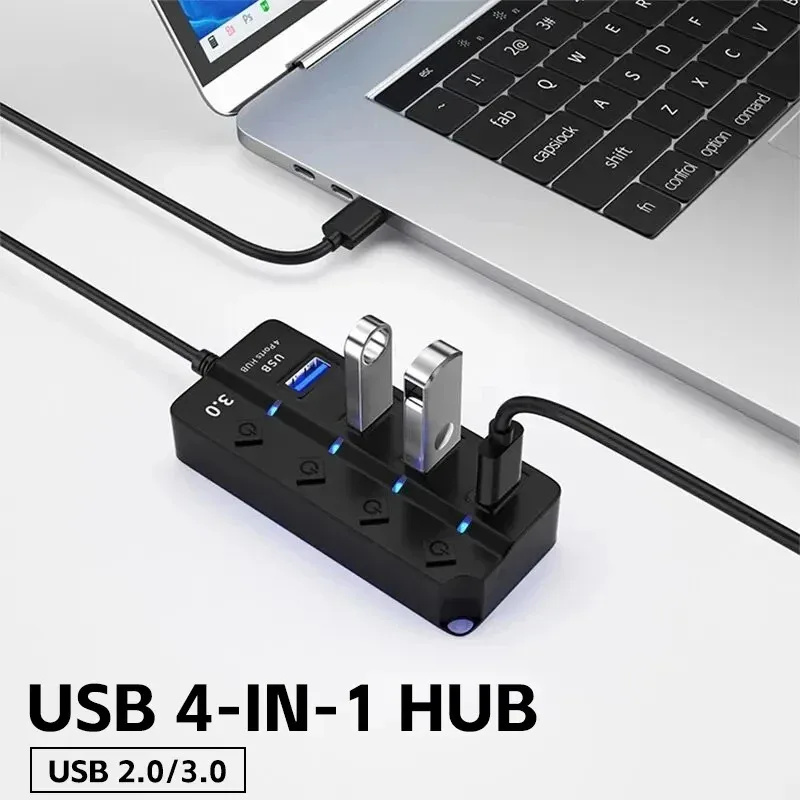
This hub comes in two primary configurations: a 4-port model featuring one USB 3.0 port and three USB 2.0 ports, and a 7-port variant with one USB 3.0 and six USB 2.0 ports. The inclusion of both USB 3.0 and USB 2.0 ports provides a balanced approach to connectivity. USB 3.0, often referred to as SuperSpeed USB, delivers data transfer rates up to 5 Gigabits per second (Gbps). This is a significant leap from USB 2.0's maximum theoretical speed of 480 Megabits per second (Mbps).
For practical application, the USB 3.0 port is ideal for bandwidth-intensive tasks. Imagine transferring large video files or backing up an entire external hard drive; the faster speed drastically cuts down waiting times. The USB 2.0 ports, while slower, are perfectly adequate for less demanding peripherals like keyboards, mice, printers, and webcams. This intelligent port distribution ensures that critical data transfers benefit from high speed, while everyday accessories remain reliably connected.
Unlike generic USB splitters that often compromise on speed or offer a uniform, slower standard, this hub strategically combines both. It means users can connect a high-speed SSD to the USB 3.0 port for rapid data access, while simultaneously maintaining stable connections for their keyboard and mouse without performance degradation. This mixed-port approach is a thoughtful design choice.
A standout feature of this USB hub is the inclusion of individual power switches for each port, accompanied by clear LED indicator lamps. Each port has its own dedicated switch. The blue LED indicators clearly show which ports are active.
This granular control offers substantial benefits for both device longevity and energy efficiency. Users can power down specific peripherals, such as an external hard drive or a memory card reader, when they are not in active use. This prevents unnecessary wear and tear on the device, reduces phantom power draw, and minimizes potential electromagnetic interference. It also enhances security, as inactive devices are effectively disconnected from the system.
Compared to standard, always-on USB hubs, this individual switching capability is a significant upgrade. It eliminates the need to physically unplug devices to power them down, contributing to a cleaner, more organized desk setup. For a cable management guru, this level of control is invaluable for maintaining an uncluttered and efficient workspace, preventing the tangle of wires that often plagues multi-device setups.
The hub boasts driver-free plug-and-play functionality, ensuring immediate usability across a wide range of operating systems. Compatibility extends to Windows, macOS, and Linux, making it a truly universal accessory. No complex software installations are required.
This seamless integration is a major time-saver. Users can simply connect the hub to their computer's USB port, and it will be instantly recognized and ready for use. This is particularly beneficial for individuals who frequently switch between different computers or operating systems, or for those who prefer a minimalist software footprint. It removes a common barrier to entry for many tech accessories.
Many entry-level hubs, especially those from lesser-known brands, can sometimes require specific drivers or lead to compatibility issues. This hub, by contrast, adheres to universal USB standards, ensuring a smooth experience. It's a reliable choice for diverse computing environments, from a professional workstation to a home media center.
The physical design of the hub is compact and features a matte black finish, contributing to a discreet presence on any desk. The integrated cable, specified as 30CM in the product title, is relatively short. This cable length is strategic.
The short cable promotes a tidy aesthetic by minimizing excess slack, which is a common source of desk clutter. It encourages the hub to be positioned close to the host device, creating a more integrated and less sprawling setup. For users with laptops or compact desktops, this design prevents the need to bundle or hide long, unruly cables, aligning perfectly with principles of effective cable management.
Unlike hubs with excessively long, stiff cables that can be difficult to route and secure, this hub's shorter, more manageable lead is an advantage for maintaining a clean line. Its sturdy plastic housing, while not premium metal, appears robust enough for daily use, resisting minor bumps and scrapes. The design prioritizes functional tidiness over elaborate aesthetics, a practical choice for a utility device.
The visual cues indicate broad compatibility with a variety of peripherals. Icons depict support for U disks (USB flash drives), keyboards, mice, printers, external hard drives, and mobile phones. This versatility makes the hub a central point for connecting almost any standard USB accessory.
Consider a home office scenario where a user might have a wireless mouse dongle, an external webcam for video calls, a printer cable, and an external SSD for project files. All these can be connected simultaneously, with the ability to power cycle specific devices as needed. This consolidates multiple connections into one accessible unit, freeing up precious ports on the host computer.
Generic hubs often lack the individual power switching, forcing all connected devices to remain active. This hub's design offers a more thoughtful approach, allowing users to tailor their active connections to their immediate needs. It transforms a scattered collection of peripherals into an organized, responsive ecosystem, making it a valuable addition for anyone seeking to optimize their digital workspace.
The visible materials imply a focus on functional durability. The housing is made of a sturdy black plastic, designed to withstand the rigors of daily desk use. The integrated cable appears to have a standard PVC jacket, providing essential protection for the internal wiring.
From a cable management perspective, the robust construction of the housing is important. A flimsy hub can easily be dislodged or damaged, leading to frustrating disconnections. This unit appears designed to sit stably, its compact form factor preventing it from becoming an obstacle. The black color ensures it blends seamlessly into most desk environments, avoiding visual distraction.
Many cheaper hubs often feature thin, easily damaged cables or brittle plastic. This product's apparent build quality suggests a more considered approach, aiming for reliability without significant aesthetic compromise. It's a practical tool engineered to endure, reducing the need for frequent replacements and contributing to a long-term tidy setup.
Imagine a desk free from tangled wires, where every peripheral is within reach yet neatly managed. Envision effortlessly powering on your external hard drive only when needed, its status clearly indicated by a soft blue glow. This hub offers the capability to transform a chaotic collection of devices into an organized, efficient command center, allowing focus on tasks rather than connectivity frustrations.
Expanding Your Digital Horizon
This hub comes in two primary configurations: a 4-port model featuring one USB 3.0 port and three USB 2.0 ports, and a 7-port variant with one USB 3.0 and six USB 2.0 ports. The inclusion of both USB 3.0 and USB 2.0 ports provides a balanced approach to connectivity. USB 3.0, often referred to as SuperSpeed USB, delivers data transfer rates up to 5 Gigabits per second (Gbps). This is a significant leap from USB 2.0's maximum theoretical speed of 480 Megabits per second (Mbps).
For practical application, the USB 3.0 port is ideal for bandwidth-intensive tasks. Imagine transferring large video files or backing up an entire external hard drive; the faster speed drastically cuts down waiting times. The USB 2.0 ports, while slower, are perfectly adequate for less demanding peripherals like keyboards, mice, printers, and webcams. This intelligent port distribution ensures that critical data transfers benefit from high speed, while everyday accessories remain reliably connected.
Unlike generic USB splitters that often compromise on speed or offer a uniform, slower standard, this hub strategically combines both. It means users can connect a high-speed SSD to the USB 3.0 port for rapid data access, while simultaneously maintaining stable connections for their keyboard and mouse without performance degradation. This mixed-port approach is a thoughtful design choice.
Precision Power Management
A standout feature of this USB hub is the inclusion of individual power switches for each port, accompanied by clear LED indicator lamps. Each port has its own dedicated switch. The blue LED indicators clearly show which ports are active.
This granular control offers substantial benefits for both device longevity and energy efficiency. Users can power down specific peripherals, such as an external hard drive or a memory card reader, when they are not in active use. This prevents unnecessary wear and tear on the device, reduces phantom power draw, and minimizes potential electromagnetic interference. It also enhances security, as inactive devices are effectively disconnected from the system.
Compared to standard, always-on USB hubs, this individual switching capability is a significant upgrade. It eliminates the need to physically unplug devices to power them down, contributing to a cleaner, more organized desk setup. For a cable management guru, this level of control is invaluable for maintaining an uncluttered and efficient workspace, preventing the tangle of wires that often plagues multi-device setups.
Effortless Integration
The hub boasts driver-free plug-and-play functionality, ensuring immediate usability across a wide range of operating systems. Compatibility extends to Windows, macOS, and Linux, making it a truly universal accessory. No complex software installations are required.
This seamless integration is a major time-saver. Users can simply connect the hub to their computer's USB port, and it will be instantly recognized and ready for use. This is particularly beneficial for individuals who frequently switch between different computers or operating systems, or for those who prefer a minimalist software footprint. It removes a common barrier to entry for many tech accessories.
Many entry-level hubs, especially those from lesser-known brands, can sometimes require specific drivers or lead to compatibility issues. This hub, by contrast, adheres to universal USB standards, ensuring a smooth experience. It's a reliable choice for diverse computing environments, from a professional workstation to a home media center.
The Ergonomics of Connectivity
The physical design of the hub is compact and features a matte black finish, contributing to a discreet presence on any desk. The integrated cable, specified as 30CM in the product title, is relatively short. This cable length is strategic.
The short cable promotes a tidy aesthetic by minimizing excess slack, which is a common source of desk clutter. It encourages the hub to be positioned close to the host device, creating a more integrated and less sprawling setup. For users with laptops or compact desktops, this design prevents the need to bundle or hide long, unruly cables, aligning perfectly with principles of effective cable management.
Unlike hubs with excessively long, stiff cables that can be difficult to route and secure, this hub's shorter, more manageable lead is an advantage for maintaining a clean line. Its sturdy plastic housing, while not premium metal, appears robust enough for daily use, resisting minor bumps and scrapes. The design prioritizes functional tidiness over elaborate aesthetics, a practical choice for a utility device.
Beyond the Basics: Use Cases and Practicality
The visual cues indicate broad compatibility with a variety of peripherals. Icons depict support for U disks (USB flash drives), keyboards, mice, printers, external hard drives, and mobile phones. This versatility makes the hub a central point for connecting almost any standard USB accessory.
Consider a home office scenario where a user might have a wireless mouse dongle, an external webcam for video calls, a printer cable, and an external SSD for project files. All these can be connected simultaneously, with the ability to power cycle specific devices as needed. This consolidates multiple connections into one accessible unit, freeing up precious ports on the host computer.
Generic hubs often lack the individual power switching, forcing all connected devices to remain active. This hub's design offers a more thoughtful approach, allowing users to tailor their active connections to their immediate needs. It transforms a scattered collection of peripherals into an organized, responsive ecosystem, making it a valuable addition for anyone seeking to optimize their digital workspace.
Durability and Aesthetics in Cable Management
The visible materials imply a focus on functional durability. The housing is made of a sturdy black plastic, designed to withstand the rigors of daily desk use. The integrated cable appears to have a standard PVC jacket, providing essential protection for the internal wiring.
From a cable management perspective, the robust construction of the housing is important. A flimsy hub can easily be dislodged or damaged, leading to frustrating disconnections. This unit appears designed to sit stably, its compact form factor preventing it from becoming an obstacle. The black color ensures it blends seamlessly into most desk environments, avoiding visual distraction.
Many cheaper hubs often feature thin, easily damaged cables or brittle plastic. This product's apparent build quality suggests a more considered approach, aiming for reliability without significant aesthetic compromise. It's a practical tool engineered to endure, reducing the need for frequent replacements and contributing to a long-term tidy setup.
Imagine a desk free from tangled wires, where every peripheral is within reach yet neatly managed. Envision effortlessly powering on your external hard drive only when needed, its status clearly indicated by a soft blue glow. This hub offers the capability to transform a chaotic collection of devices into an organized, efficient command center, allowing focus on tasks rather than connectivity frustrations.