TP4056 Lithium Battery Charger Module with USB-C and Protection
Official Store Deal
Expert Analysis Overview
Precision Power Management for DIY Electronics
The TP4056 Lithium Battery Charger Module is a compact, versatile power management solution engineered for integrating reliable charging capabilities into custom electronics projects. Its design prioritizes ease of integration and robust protection for single-cell lithium-ion batteries, a critical aspect for DIY enthusiasts and professional repair technicians alike. This module addresses the common challenge of safely charging 3.7V lithium cells, a frequent requirement in portable devices and custom builds.
Core Charging Architecture
At its heart, the module utilizes the TP4056 charge controller IC. This dedicated chip manages the entire charging cycle for single-cell lithium batteries. It employs a constant-current/constant-voltage (CC/CV) charging method, which is the industry standard for safely and efficiently charging lithium-ion cells. The module delivers a maximum charge current of 1 Ampere. This current is suitable for a wide range of 18650 batteries and other single-cell lithium formats.
The implication of this CC/CV architecture is a prolonged battery lifespan. Overcharging or improper charging cycles significantly degrade battery health. This module prevents such issues. It ensures the battery reaches its optimal charge level without stress.
Compared to rudimentary charging circuits, which might only offer a resistive current limit, the TP4056 provides precise voltage regulation. This precision is paramount for battery longevity. It also offers a more consistent charging experience.
Modern Connectivity and Flexible Integration
A key feature of this particular variant is the USB Type-C input port. This modern connector offers reversible plug orientation, enhancing user convenience. The Type-C port allows for direct power input from standard 5V USB power sources, such as wall adapters, power banks, or computer USB ports. This simplifies the power supply requirements for projects.
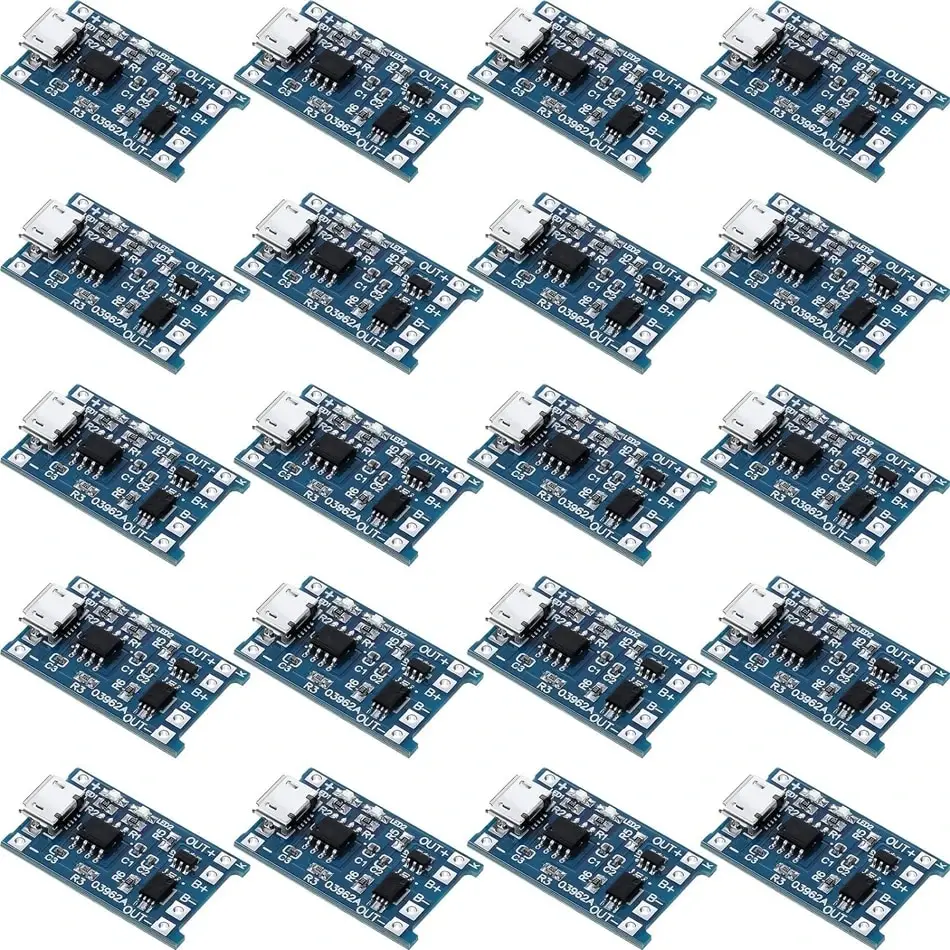
Beyond the USB-C port, the module also includes dedicated solder pads for both input and output connections. The "IN+" and "IN-" pads allow for alternative 5V power input, useful when a USB-C cable is impractical or a permanent wired connection is preferred. Similarly, "B+" and "B-" pads are for direct battery connection, while "OUT+" and "OUT-" provide a protected output from the battery. This flexibility is invaluable.
This dual input method provides significant versatility for integration. Technicians can choose the most appropriate connection method for their specific application. It avoids proprietary port issues.
Integrated Battery Safeguards
The module incorporates essential battery protection features, a crucial aspect for safety and device longevity. It includes circuitry to prevent overcharge, over-discharge, and overcurrent conditions. The charge cut-off voltage is precisely set at 4.2V ±1%, preventing the battery from being charged beyond its safe limit. An over-discharge protection voltage of 2.5V ensures the battery is not drained too low, which can cause irreversible damage and reduce capacity.
The overcurrent protection is rated at 3 Amperes. This safeguards against excessive current draw from the battery, which could lead to overheating or damage to both the battery and the connected load. These protections are vital. They extend the operational life of the battery.
Without these integrated safeguards, custom battery-powered devices would require additional external protection circuits. This adds complexity and cost. The inclusion of these features on a single, compact board streamlines design. It reduces the bill of materials.
Visual Status Indicators
For immediate feedback on the charging process, the module is equipped with two LED indicators. A red LED illuminates when the battery is actively charging. Once the battery reaches its full charge capacity, the red LED extinguishes, and a green LED illuminates. This provides clear visual confirmation.
These indicators are simple yet effective. They eliminate guesswork regarding the battery's charge status. Users can quickly ascertain if charging is in progress or complete. This is a practical benefit.
Many basic charging circuits lack such clear visual cues. The presence of distinct charging and full indicators improves user experience. It also aids in troubleshooting.
Physical Construction and Component Quality
The module's physical construction features a compact blue PCB (Printed Circuit Board). The dimensions are approximately 28mm by 17mm. This small footprint allows for easy integration into tight enclosures. The surface-mount components are neatly arranged. Solder points appear clean and well-defined in the provided images.
The visible components, including the TP4056 IC, the DW01A battery protection IC, and the FS8205A dual N-channel MOSFET, are standard for this type of module. Their widespread use suggests a proven design. The USB Type-C connector is securely mounted. Its robust construction is evident.
This compact and organized layout facilitates integration. It minimizes the risk of accidental short circuits. The component selection reflects a balance between cost-effectiveness and functional reliability.
Application Versatility
This charging module is highly versatile for various DIY and repair applications. It is ideal for powering portable projects such as custom Bluetooth speakers, small robotics, IoT devices, or wearable electronics that rely on single-cell lithium batteries. Repair technicians can use it to replace faulty charging circuits in existing devices or to add charging capabilities to older gadgets. Its small size is a major advantage.
Consider a scenario where a vintage portable radio needs a modern power solution. This module can be integrated to allow charging via a common USB-C cable. This breathes new life into old tech. It offers a practical upgrade.
Unlike proprietary charging solutions, this module offers an open-source friendly approach. It provides a standardized component for custom power management. This fosters innovation.
Long-Term Value and Project Efficiency
Purchasing these modules in a 10-piece pack offers significant long-term value for active hobbyists and professionals. The unit cost per module becomes highly economical. This reduces the barrier to entry for multiple projects. Having a stock of these modules on hand ensures that charging solutions are readily available. It prevents project delays.
The cost-per-use becomes negligible when considering the utility provided across ten different applications. This bulk purchase strategy is efficient. It supports continuous experimentation.
Compared to buying individual modules, which often incur higher per-unit costs and shipping fees, a multi-pack is a smart investment. It streamlines the procurement process. It ensures project continuity.
Imagine completing a series of custom smart home sensors, each requiring a reliable charging circuit. With a pack of these modules, each sensor can be equipped with robust power management. The charging process becomes effortless. Your devices will operate reliably. You will have peace of mind knowing your custom electronics are powered safely and efficiently, ready for any task.