TP4056 Lithium Battery Charger Module with Protection
Official Store Deal
Expert Analysis Overview
Precision Power Management: The Core Function
The TP4056 Lithium Battery Charger Module is a compact, single-cell lithium-ion battery charging and protection solution, specifically designed for 18650 cells and similar 3.7V lithium chemistries. This module integrates the TP4056 charging IC, capable of delivering a 1A constant current/constant voltage (CC/CV) charge profile. The 4.2V termination voltage ensures optimal charging for standard lithium-ion batteries. This is a crucial component for DIY electronics.This 1A charge rate translates to a measured, safe charging cycle for most 18650 cells, typically ranging from 2000mAh to 3400mAh. A 3000mAh cell would require approximately 3-4 hours for a full charge, considering the CC/CV stages. This measured approach prioritizes battery longevity over speed, preventing undue stress on the cell. It's a reliable charging method.
Unlike many generic charging circuits that might offer higher, unregulated currents, the TP4056 adheres to a strict charging algorithm. This prevents overcurrent conditions that can degrade battery health or, in extreme cases, lead to thermal runaway. Standard USB power sources (5V) are compatible, making it highly accessible. This module offers a balanced approach to power delivery.
Thermal Considerations and Efficiency
Operating at 1A, the TP4056 IC generates a noticeable amount of heat, particularly when the input voltage is significantly higher than the battery voltage (e.g., 5V input charging a 3.0V depleted cell). This heat dissipation is a natural consequence of linear regulation. Proper ventilation or heatsinking, even passive, is advisable for continuous high-current operation. Heat management is key.For embedded applications where space is at a premium, understanding this thermal characteristic is vital for enclosure design. The module's small footprint necessitates careful consideration of its operating environment. Overheating can reduce component lifespan. This ensures stable performance.
Compared to more advanced buck converter-based chargers, the TP4056's linear design is simpler and more cost-effective, but less efficient in terms of heat generation. However, for its intended purpose of charging single cells at 1A, the trade-off is often acceptable. It's a practical solution.
Integrated Safeguards: Beyond Basic Charging
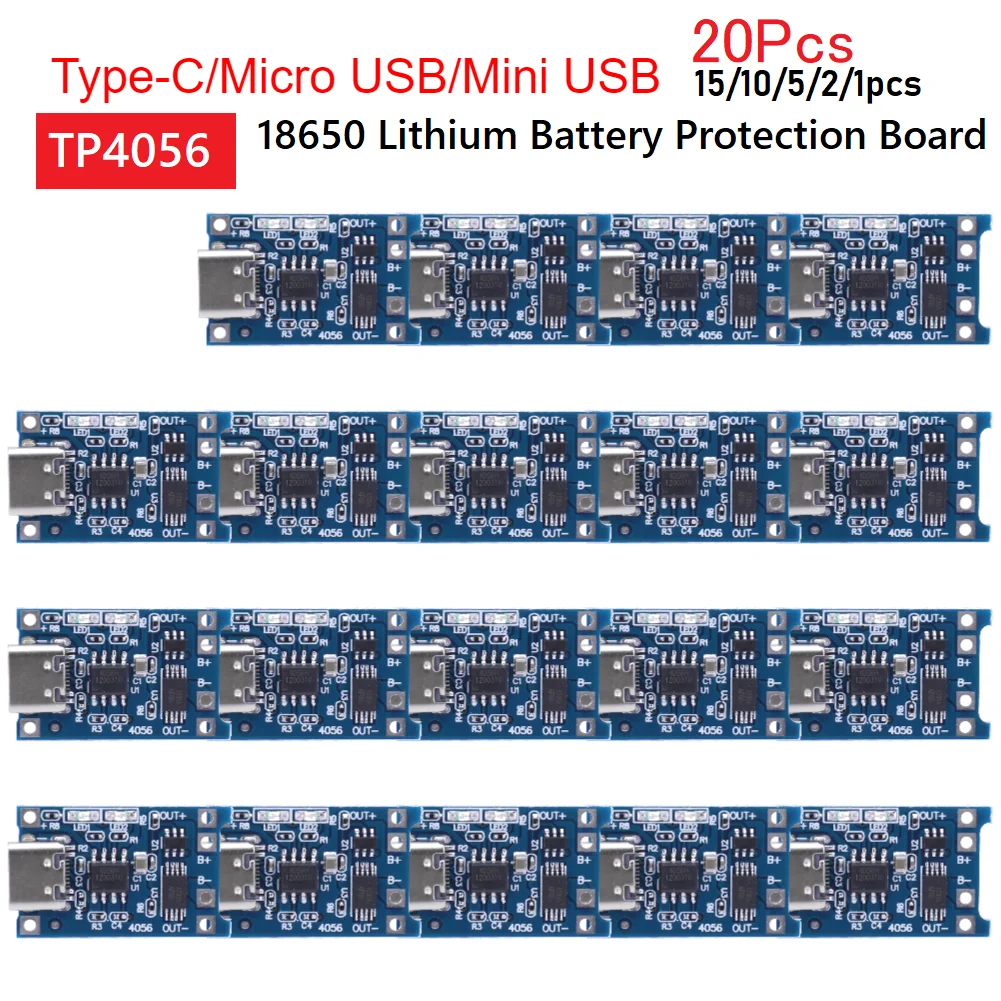
Beyond its charging capabilities, this module incorporates essential battery protection features, typically managed by a DW01A protection IC paired with an FS8205A dual MOSFET. These components provide crucial safeguards against common lithium battery hazards. Safety is paramount.Specifically, the protection circuit prevents overcharge by disconnecting the battery when it reaches 4.2V, and over-discharge by cutting off the load when the battery voltage drops below approximately 2.5V. This extends the battery's cycle life significantly. It also includes short-circuit protection, immediately cutting power if the output terminals are accidentally shorted. This protects both the battery and the connected load. Such features are non-negotiable for lithium cells.
Many basic TP4056 modules on the market omit these protection ICs to reduce cost, leaving the battery vulnerable. This integrated protection differentiates this module, offering a more complete and safer solution for battery management. It's a significant upgrade over unprotected alternatives. This ensures peace of mind.
Output Functionality and Load Management
The module features separate output pads (OUT+/OUT-) which are connected to the battery through the protection circuit. This means the protection functions apply to any load connected to these output terminals. The battery can power a load while charging, though the charge current will be shared. Power delivery is flexible.When the battery is fully charged, the protection circuit will prevent further charging, and the load will draw directly from the battery. If the battery voltage drops too low, the protection circuit will disconnect the load, preserving the battery's health. This prevents deep discharge. This dual functionality simplifies power management in portable projects.
Unlike simple charging boards that only charge the battery, this module acts as a mini-Battery Management System (BMS) for single cells. This integrated approach reduces component count and complexity for the end-user. It's a comprehensive solution for single-cell applications.
Connectivity Versatility: Adapting to Your Ecosystem
A key advantage of these modules is the variety of USB input options: Type-C, Micro USB, and Mini USB. This broad compatibility allows users to leverage existing power adapters and cables. Cable clutter is reduced.For modern projects, the Type-C variant is particularly appealing, aligning with contemporary device standards and offering reversible plug orientation. The Micro USB and Mini USB versions cater to legacy systems or specific project requirements where those connectors are already prevalent. This flexibility is invaluable for prototyping. It adapts to diverse needs.
Unlike older, fixed-input charging boards, the availability of multiple USB types means users don't need to purchase new cables or adapters. This reduces friction in project development and deployment. It's a user-centric design choice. This simplifies power input.
Physical Footprint and Integration: Designed for Compact Projects
The module's diminutive dimensions, approximately 28mm x 17mm, make it ideal for integration into small enclosures and portable devices. Its compact size is a major asset for miniaturized electronics. Space is often critical.Clearly labeled solder pads for B+, B-, OUT+, and OUT
Compared to bulkier power management solutions, this module's small form factor and straightforward interface streamline the design process for compact, battery-powered gadgets. It's a perfect fit for wearables, IoT devices, and small robotics. This enables compact designs.
Real-World Application: Powering Your Innovations
This TP4056 module is an indispensable tool for hobbyists, makers, and engineers working on portable electronics. Its robust charging and protection capabilities ensure the longevity and safety of lithium-ion batteries in custom projects. It powers innovation.Consider a scenario where a custom IoT sensor needs to be powered by an 18650 cell. This module provides the necessary charging circuit, allowing the device to be recharged via a standard USB cable, while simultaneously protecting the battery from overcharge and over-discharge. This simplifies power integration. It's highly practical.
For those building power banks, portable audio devices, or even small robotic platforms, this module offers a reliable and cost-effective foundation for battery management. It eliminates the need for complex discrete component designs, accelerating development cycles. It's a time-saver for creators.
Imagine the seamless integration into your next portable project: a compact, efficient power solution that just works. The ability to charge and protect your lithium cells with a single, affordable board frees you to focus on the core functionality of your device. This module ensures your creations are powered safely and reliably, ready for any adventure. It empowers your projects.