TLV493D Triple-Axis Magnetometer - STEMMA QT
Official Store Deal
Expert Analysis Overview
The TLV493D Triple-Axis Magnetometer is a precision magnetic sensing module, purpose-built for integrating nuanced environmental awareness into advanced home automation systems. This compact sensor provides three-dimensional magnetic field data, moving beyond the limitations of simple binary magnetic switches to offer granular insights into magnetic environments. Its design emphasizes ease of integration, particularly for developers utilizing popular platforms like Arduino, through standardized STEMMA QT and QWIIC connectors. This module represents a significant upgrade for smart home architects seeking to implement sophisticated, context-aware automation routines.
The TLV493D sensor core delivers highly accurate readings across the X, Y, and Z axes. This three-dimensional data captures the full complexity of a magnetic field. Traditional magnetic sensors often provide only a binary state, limiting their utility. This sensor offers continuous, detailed information, which is a major advantage.
Imagine a scenario where a simple door sensor only tells you if a door is open or closed. With a triple-axis magnetometer, you gain the ability to detect not just the door's state, but potentially its angle of opening or even the presence of magnetic objects nearby. This capability enables more intelligent decision-making within a smart home ecosystem, allowing for automation scripts that respond to subtle changes rather than just on/off states.
Compared to basic Hall effect sensors or reed switches, the TLV493D provides a richer dataset. It allows for advanced applications like contactless position sensing, magnetic field mapping, or even simple gesture recognition. This level of detail is critical for complex automation. The resolution and range of the TLV493D chip ensure reliable data acquisition in diverse magnetic conditions.
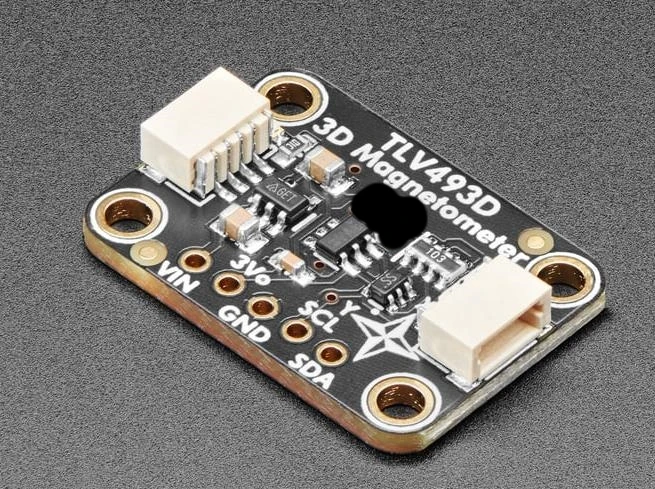
Visually, the module presents a compact printed circuit board (PCB) with clearly labeled components. Two white JST-SH connectors, synonymous with STEMMA QT and QWIIC standards, are prominent. These connectors simplify wiring significantly.
These standardized connectors are a boon for rapid prototyping and deployment. Users can connect the module to a compatible microcontroller board without soldering, reducing setup time and potential wiring errors. The presence of traditional header pins for VIN, 3V, GND, SCL, and SDA offers flexibility for those preferring breadboard integration or custom wiring. This dual connectivity approach caters to a broad range of development workflows.
Unlike modules that require intricate wiring and custom libraries, this board's adherence to STEMMA QT/QWIIC protocols streamlines the process. It is ready for immediate use with a wide array of existing hardware. This ensures compatibility and reduces the learning curve for new users, accelerating project completion.
Connectivity is primarily handled via the I2C protocol, indicated by the SCL and SDA pins. I2C is a widely adopted serial communication standard.
This choice of communication protocol ensures broad compatibility with almost any microcontroller, including popular platforms like Arduino, ESP32, and Raspberry Pi. The I2C bus allows multiple devices to share the same two wires (SCL for clock, SDA for data), simplifying wiring in projects with many sensors. This reduces cable clutter and simplifies the overall system architecture, crucial for complex smart home installations.
Many generic sensors force users into specific pin configurations or proprietary communication methods. The TLV493D's reliance on I2C, coupled with STEMMA QT/QWIIC, makes it inherently open and interoperable. This open API approach allows developers to integrate the sensor data into custom home automation platforms or existing ecosystems like Home Assistant or OpenHAB, provided a suitable gateway is used. It avoids vendor lock-in, a common frustration in smart electronics.
The TLV493D is designed for low-power operation and provides fast update rates. This is essential for responsive automation.
Low latency data acquisition means that changes in the magnetic field are detected and reported almost instantaneously. For applications like door/window monitoring, or even detecting the movement of a magnetically-actuated device, this speed is paramount. A delayed response can render automation ineffective or frustrating for the user. Fast updates ensure that the smart home system reacts precisely when needed.
Compared to polling slower sensors, the TLV493D's efficient data delivery minimizes delays in the automation chain. This translates directly into a more fluid and intuitive user experience. Imagine a smart lock that responds without perceptible lag when a magnetic key fob is presented. This responsiveness is a core capability of this sensor, enabling truly interconnected and script-focused smart home scenarios.
The ability to sense magnetic fields in three dimensions opens up numerous possibilities for home automation. It enables creative solutions.
Consider using this sensor for precise position detection of blinds or curtains. Instead of just knowing if they are fully open or closed, the system could determine intermediate positions based on magnetic markers. This allows for fine-tuned light control and energy management. Another application could involve contactless human-machine interfaces, where magnetic rings or objects trigger actions without physical contact.
Unlike traditional proximity sensors that detect presence, a magnetometer can differentiate between various magnetic signatures or fields. This allows for more secure and intelligent access control systems. For example, a specific magnetic pattern could unlock a drawer, while a general magnetic presence would not. This offers a layer of sophistication that basic sensors simply cannot provide, enhancing the capability of smart security.
While highly capable, users must consider the environmental context for optimal performance. Magnetic interference can impact readings.
Placement of the sensor is critical; strong electromagnetic fields from motors, power supplies, or large appliances can introduce noise. Careful calibration and shielding might be necessary in electrically noisy environments. This is a common challenge with any magnetic sensor, not a flaw of the TLV493D itself. Understanding these limitations ensures successful deployment.
Unlike sensors that operate purely on light or proximity, the TLV493D's output is directly influenced by its surroundings. It requires thoughtful integration. The small form factor allows for discreet placement, but this must be balanced against potential sources of interference. Planning its location is a key step.
This TLV493D Triple-Axis Magnetometer empowers home automation architects to design systems that are not just reactive, but truly responsive and context-aware. Imagine a home where every subtle shift in its magnetic environment contributes to a seamless, intuitive living experience. Envision doors that know not just if they are open, but how far, or appliances that activate with a mere wave of a magnetically-embedded hand. This module integrates the physical and digital worlds, allowing for sophisticated routines and voice control that feel less like commands and more like natural extensions of your will. The future of an interconnected, script-focused home is built on such precise, nuanced data, transforming daily life into an effortlessly automated symphony of comfort and convenience.
Precision in Magnetic Landscapes
The TLV493D sensor core delivers highly accurate readings across the X, Y, and Z axes. This three-dimensional data captures the full complexity of a magnetic field. Traditional magnetic sensors often provide only a binary state, limiting their utility. This sensor offers continuous, detailed information, which is a major advantage.
Imagine a scenario where a simple door sensor only tells you if a door is open or closed. With a triple-axis magnetometer, you gain the ability to detect not just the door's state, but potentially its angle of opening or even the presence of magnetic objects nearby. This capability enables more intelligent decision-making within a smart home ecosystem, allowing for automation scripts that respond to subtle changes rather than just on/off states.
Compared to basic Hall effect sensors or reed switches, the TLV493D provides a richer dataset. It allows for advanced applications like contactless position sensing, magnetic field mapping, or even simple gesture recognition. This level of detail is critical for complex automation. The resolution and range of the TLV493D chip ensure reliable data acquisition in diverse magnetic conditions.
The Architecture of Sensing
Visually, the module presents a compact printed circuit board (PCB) with clearly labeled components. Two white JST-SH connectors, synonymous with STEMMA QT and QWIIC standards, are prominent. These connectors simplify wiring significantly.
These standardized connectors are a boon for rapid prototyping and deployment. Users can connect the module to a compatible microcontroller board without soldering, reducing setup time and potential wiring errors. The presence of traditional header pins for VIN, 3V, GND, SCL, and SDA offers flexibility for those preferring breadboard integration or custom wiring. This dual connectivity approach caters to a broad range of development workflows.
Unlike modules that require intricate wiring and custom libraries, this board's adherence to STEMMA QT/QWIIC protocols streamlines the process. It is ready for immediate use with a wide array of existing hardware. This ensures compatibility and reduces the learning curve for new users, accelerating project completion.
Seamless Integration Protocols
Connectivity is primarily handled via the I2C protocol, indicated by the SCL and SDA pins. I2C is a widely adopted serial communication standard.
This choice of communication protocol ensures broad compatibility with almost any microcontroller, including popular platforms like Arduino, ESP32, and Raspberry Pi. The I2C bus allows multiple devices to share the same two wires (SCL for clock, SDA for data), simplifying wiring in projects with many sensors. This reduces cable clutter and simplifies the overall system architecture, crucial for complex smart home installations.
Many generic sensors force users into specific pin configurations or proprietary communication methods. The TLV493D's reliance on I2C, coupled with STEMMA QT/QWIIC, makes it inherently open and interoperable. This open API approach allows developers to integrate the sensor data into custom home automation platforms or existing ecosystems like Home Assistant or OpenHAB, provided a suitable gateway is used. It avoids vendor lock-in, a common frustration in smart electronics.
Real-Time Environmental Awareness
The TLV493D is designed for low-power operation and provides fast update rates. This is essential for responsive automation.
Low latency data acquisition means that changes in the magnetic field are detected and reported almost instantaneously. For applications like door/window monitoring, or even detecting the movement of a magnetically-actuated device, this speed is paramount. A delayed response can render automation ineffective or frustrating for the user. Fast updates ensure that the smart home system reacts precisely when needed.
Compared to polling slower sensors, the TLV493D's efficient data delivery minimizes delays in the automation chain. This translates directly into a more fluid and intuitive user experience. Imagine a smart lock that responds without perceptible lag when a magnetic key fob is presented. This responsiveness is a core capability of this sensor, enabling truly interconnected and script-focused smart home scenarios.
Beyond the Binary Switch
The ability to sense magnetic fields in three dimensions opens up numerous possibilities for home automation. It enables creative solutions.
Consider using this sensor for precise position detection of blinds or curtains. Instead of just knowing if they are fully open or closed, the system could determine intermediate positions based on magnetic markers. This allows for fine-tuned light control and energy management. Another application could involve contactless human-machine interfaces, where magnetic rings or objects trigger actions without physical contact.
Unlike traditional proximity sensors that detect presence, a magnetometer can differentiate between various magnetic signatures or fields. This allows for more secure and intelligent access control systems. For example, a specific magnetic pattern could unlock a drawer, while a general magnetic presence would not. This offers a layer of sophistication that basic sensors simply cannot provide, enhancing the capability of smart security.
Strategic Deployment Considerations
While highly capable, users must consider the environmental context for optimal performance. Magnetic interference can impact readings.
Placement of the sensor is critical; strong electromagnetic fields from motors, power supplies, or large appliances can introduce noise. Careful calibration and shielding might be necessary in electrically noisy environments. This is a common challenge with any magnetic sensor, not a flaw of the TLV493D itself. Understanding these limitations ensures successful deployment.
Unlike sensors that operate purely on light or proximity, the TLV493D's output is directly influenced by its surroundings. It requires thoughtful integration. The small form factor allows for discreet placement, but this must be balanced against potential sources of interference. Planning its location is a key step.
The Future of Responsive Living
This TLV493D Triple-Axis Magnetometer empowers home automation architects to design systems that are not just reactive, but truly responsive and context-aware. Imagine a home where every subtle shift in its magnetic environment contributes to a seamless, intuitive living experience. Envision doors that know not just if they are open, but how far, or appliances that activate with a mere wave of a magnetically-embedded hand. This module integrates the physical and digital worlds, allowing for sophisticated routines and voice control that feel less like commands and more like natural extensions of your will. The future of an interconnected, script-focused home is built on such precise, nuanced data, transforming daily life into an effortlessly automated symphony of comfort and convenience.