Mini Wi-Fi Surveillance Camera
Official Store Deal
Expert Analysis Overview
The Mini Wi-Fi Surveillance Camera is an entry-level monitoring device designed for users seeking a discreet, cost-effective solution for basic home or office oversight. As a Home Automation Architect, the focus here is on its ability to provide foundational surveillance within a smart home ecosystem, albeit with certain limitations inherent to its price point and form factor. This device positions itself as an accessible gateway to remote monitoring, emphasizing ease of use and a compact design over advanced features or high-fidelity imaging.
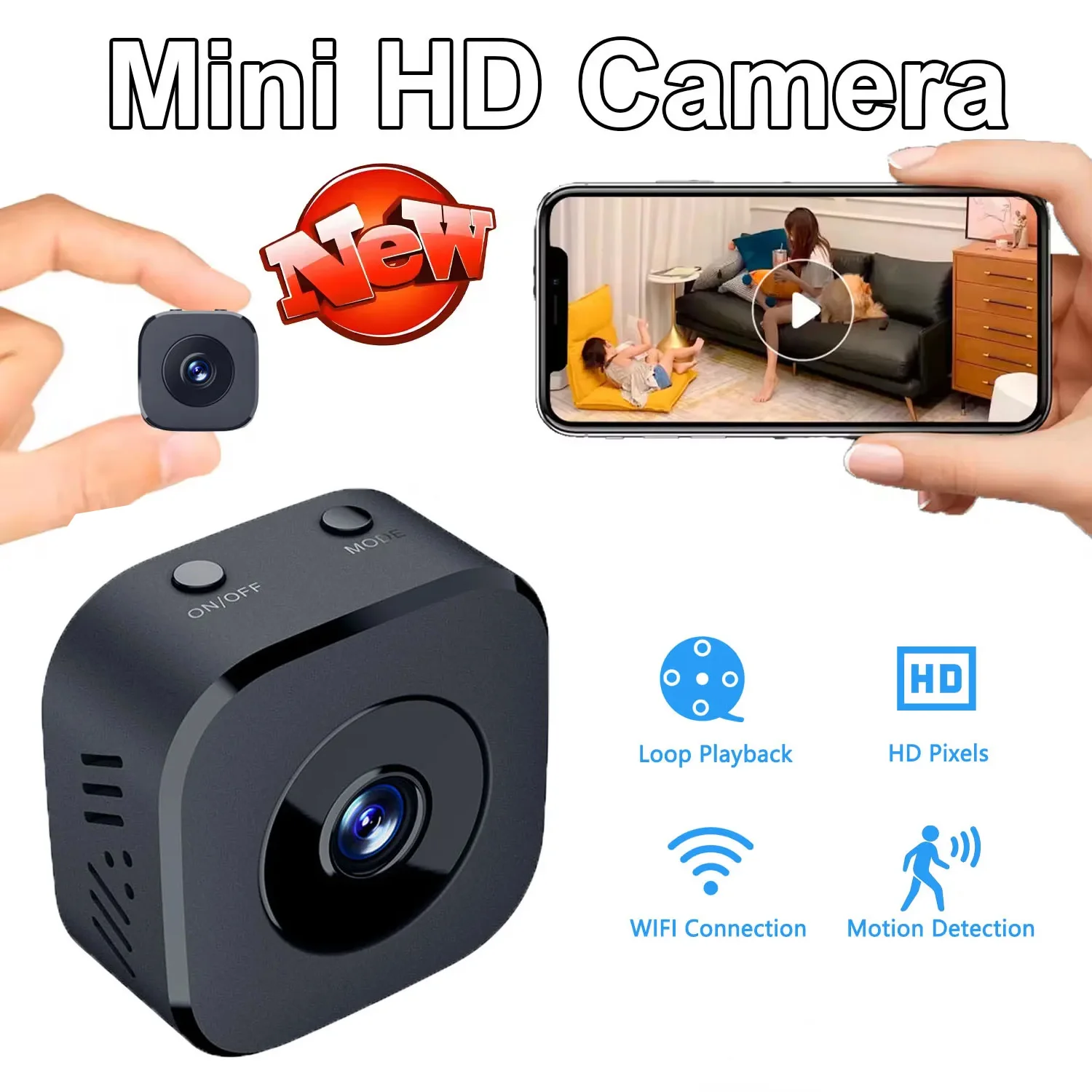
The product images prominently display a compact camera unit and various usage scenarios, alongside a graphic indicating "300,000 pixels." This pixel count translates to a resolution of approximately 640x480 (VGA), which is a standard definition. This is a crucial distinction. While the product title uses "HD Camera," 300,000 pixels does not meet modern high-definition (HD) standards, which typically begin at 720p (1280x720 pixels, approximately 921,600 pixels).
For a user deploying this camera in a scenario requiring general area monitoring, such as keeping an eye on a pet or a doorway, this resolution might suffice. It captures basic visual information. However, for detailed facial recognition or distinguishing small objects at a distance, the VGA resolution will present significant limitations. Compared to contemporary smart home cameras that often offer 1080p, 2K, or even 4K resolution, this device provides a much lower level of detail. This camera prioritizes compactness and affordability.
One image illustrates a night mode scene, depicting a black and white view. This suggests the camera utilizes infrared (IR) night vision. Standard IR night vision provides clear monochrome images in low-light or no-light conditions. The product title mentions "Full Color Night Vision," but the visual evidence points to traditional IR. Full color night vision typically requires advanced low-light sensors or supplementary white light illumination, neither of which are explicitly depicted or implied by the visible hardware. This is a common feature in budget cameras.
For basic nighttime surveillance, the monochrome IR night vision will be effective in illuminating dark spaces. It allows for continuous monitoring around the clock. Users should anticipate clear outlines and movement detection, but without the color fidelity seen in daylight conditions. This contrasts with more advanced cameras that leverage starlight sensors or integrated spotlights to maintain color information at night, offering a richer visual context.
Wireless connectivity is explicitly stated as Wi-Fi. This is the backbone of its smart home integration. Wi-Fi enables remote access and control via a smartphone application.
From an architectural perspective, Wi-Fi connectivity means this camera will likely integrate with a proprietary application. Most entry-level Wi-Fi cameras do not support open smart home protocols like Zigbee, Z-Wave, or Matter directly. This implies that while it can be monitored remotely, its ability to participate in complex, cross-platform automation routines (e.g., triggering a smart light when motion is detected by the camera, and then having that light controlled by a different brand's hub) might be limited to what the camera's specific app can facilitate, or through third-party integrations like IFTTT if supported. This is a common setup for budget devices.
The camera's advertised motion detection feature is a key component for automation. When motion is detected, the camera can trigger recordings or send alerts to a connected smartphone. This forms the basis of simple security routines. For a basic smart home setup, this functionality is foundational. Users can set up notifications to be aware of activity in monitored areas.
However, the sophistication of these automation routines will depend heavily on the accompanying mobile application. Advanced features like customizable detection zones, AI-powered person/pet detection, or integration with voice assistants (like Alexa or Google Assistant for displaying feeds) are not explicitly guaranteed or visually implied. The camera is best suited for straightforward event-triggered actions. More complex smart home environments might find its automation capabilities somewhat rudimentary compared to systems with native Matter or HomeKit support, which offer deeper, more unified control.
The camera's design is notably compact and cube-shaped, featuring a matte black finish. Its small footprint allows for discreet placement. This form factor is highly advantageous for covert monitoring or situations where a camera needs to blend into its environment without drawing attention. The visible material appears to be a standard plastic composite. This choice of material is typical for consumer electronics in this price range.
Such a compact design simplifies installation. It can be placed on shelves, mounted with a small bracket (if included), or even hidden within objects. The small size makes it highly portable. However, the plastic construction, while lightweight, may not offer the same level of impact resistance or long-term durability as cameras with metal housings or ruggedized designs. This is a common trade-off.
Images indicate USB charging and support for a TF card. USB charging implies compatibility with standard 5V USB power adapters, making it easy to power the device using common phone chargers or power banks. TF card support means local storage for recordings. This is a practical feature. Local storage is vital for continuous recording or when internet connectivity is intermittent. The capacity will depend on the card inserted.
The reliance on USB power means the camera is not truly wireless in terms of power, requiring a connection to an outlet or power source for continuous operation. While a power bank could offer temporary portability, it's not designed for extended battery-only use. The TF card slot provides an alternative to cloud storage, which may or may not be offered by the manufacturer. Users should factor in the cost of a TF card. Compared to cameras with built-in rechargeable batteries for wire-free placement or those offering extensive cloud storage plans, this camera provides a more direct, localized approach to power and data management.
One image highlights "Loop Playback" and "HD Pixels" (again, referring to the 300,000 pixels). Loop playback is a standard feature in surveillance devices, where older footage is overwritten by new recordings once the storage card is full. This ensures continuous recording without manual intervention. It's a fundamental aspect of continuous monitoring.
This functionality simplifies maintenance. Users do not need to constantly manage storage space. The camera records automatically, ensuring that the most recent events are always captured. This ease of operation is a significant benefit for casual users. However, for critical evidence, users must ensure important footage is downloaded before it is overwritten. More advanced systems might offer intelligent archiving or cloud backups to prevent accidental deletion of important events.
The presence of Wi-Fi connectivity and remote monitoring implies control via a mobile application. The app would be the primary interface for live viewing, accessing recorded footage, and configuring settings like motion detection sensitivity. This provides convenience. Users can check on their property from anywhere with an internet connection.
The overall user experience will heavily depend on the quality and features of this proprietary app. Basic apps might offer live stream and playback, while more developed ones could include scheduling, alert customization, and multi-camera views. The product appears to target users who value straightforward operation. In contrast, premium smart home cameras often integrate seamlessly into unified platforms, offering a cohesive experience across various smart devices and robust app features.
Considering the price point and features, this mini Wi-Fi camera is positioned as a highly accessible security option. Its primary value lies in offering basic surveillance capabilities at a low cost. For individuals or small businesses needing to monitor a specific area without a significant investment, this camera provides a viable solution. It offers essential features. The camera serves as a foundational component for simple security needs.
From a smart home architecture perspective, this device fits best into a system where simplicity and budget are paramount. It's suitable for augmenting an existing basic security setup or for users taking their first steps into home monitoring. It is not designed to be the central pillar of a complex, high-security, or fully integrated smart home. The camera offers a practical, no-frills approach to surveillance. More demanding applications, requiring higher resolution, advanced analytics, or deeper integration with diverse smart home protocols, would necessitate a different class of device. This camera is a tool for focused, entry-level monitoring.
Imagine the peace of mind knowing a discreet eye is watching over your home, accessible directly from your smartphone, providing essential alerts when activity occurs, without the complexity or expense of a full-scale security system. This camera makes basic remote monitoring a tangible reality for every household. It simplifies security. Your daily routines become more automated with instant notifications, allowing for proactive responses to any detected movement, right from your pocket. This ensures continuous awareness.
Imaging Prowess and Resolution Realities
The product images prominently display a compact camera unit and various usage scenarios, alongside a graphic indicating "300,000 pixels." This pixel count translates to a resolution of approximately 640x480 (VGA), which is a standard definition. This is a crucial distinction. While the product title uses "HD Camera," 300,000 pixels does not meet modern high-definition (HD) standards, which typically begin at 720p (1280x720 pixels, approximately 921,600 pixels).
For a user deploying this camera in a scenario requiring general area monitoring, such as keeping an eye on a pet or a doorway, this resolution might suffice. It captures basic visual information. However, for detailed facial recognition or distinguishing small objects at a distance, the VGA resolution will present significant limitations. Compared to contemporary smart home cameras that often offer 1080p, 2K, or even 4K resolution, this device provides a much lower level of detail. This camera prioritizes compactness and affordability.
Night Vision Capabilities
One image illustrates a night mode scene, depicting a black and white view. This suggests the camera utilizes infrared (IR) night vision. Standard IR night vision provides clear monochrome images in low-light or no-light conditions. The product title mentions "Full Color Night Vision," but the visual evidence points to traditional IR. Full color night vision typically requires advanced low-light sensors or supplementary white light illumination, neither of which are explicitly depicted or implied by the visible hardware. This is a common feature in budget cameras.
For basic nighttime surveillance, the monochrome IR night vision will be effective in illuminating dark spaces. It allows for continuous monitoring around the clock. Users should anticipate clear outlines and movement detection, but without the color fidelity seen in daylight conditions. This contrasts with more advanced cameras that leverage starlight sensors or integrated spotlights to maintain color information at night, offering a richer visual context.
Connectivity and Integration Framework
Wireless connectivity is explicitly stated as Wi-Fi. This is the backbone of its smart home integration. Wi-Fi enables remote access and control via a smartphone application.
From an architectural perspective, Wi-Fi connectivity means this camera will likely integrate with a proprietary application. Most entry-level Wi-Fi cameras do not support open smart home protocols like Zigbee, Z-Wave, or Matter directly. This implies that while it can be monitored remotely, its ability to participate in complex, cross-platform automation routines (e.g., triggering a smart light when motion is detected by the camera, and then having that light controlled by a different brand's hub) might be limited to what the camera's specific app can facilitate, or through third-party integrations like IFTTT if supported. This is a common setup for budget devices.
Automation Potential
The camera's advertised motion detection feature is a key component for automation. When motion is detected, the camera can trigger recordings or send alerts to a connected smartphone. This forms the basis of simple security routines. For a basic smart home setup, this functionality is foundational. Users can set up notifications to be aware of activity in monitored areas.
However, the sophistication of these automation routines will depend heavily on the accompanying mobile application. Advanced features like customizable detection zones, AI-powered person/pet detection, or integration with voice assistants (like Alexa or Google Assistant for displaying feeds) are not explicitly guaranteed or visually implied. The camera is best suited for straightforward event-triggered actions. More complex smart home environments might find its automation capabilities somewhat rudimentary compared to systems with native Matter or HomeKit support, which offer deeper, more unified control.
Physical Form and Durability Aspects
The camera's design is notably compact and cube-shaped, featuring a matte black finish. Its small footprint allows for discreet placement. This form factor is highly advantageous for covert monitoring or situations where a camera needs to blend into its environment without drawing attention. The visible material appears to be a standard plastic composite. This choice of material is typical for consumer electronics in this price range.
Such a compact design simplifies installation. It can be placed on shelves, mounted with a small bracket (if included), or even hidden within objects. The small size makes it highly portable. However, the plastic construction, while lightweight, may not offer the same level of impact resistance or long-term durability as cameras with metal housings or ruggedized designs. This is a common trade-off.
Power and Storage Provisions
Images indicate USB charging and support for a TF card. USB charging implies compatibility with standard 5V USB power adapters, making it easy to power the device using common phone chargers or power banks. TF card support means local storage for recordings. This is a practical feature. Local storage is vital for continuous recording or when internet connectivity is intermittent. The capacity will depend on the card inserted.
The reliance on USB power means the camera is not truly wireless in terms of power, requiring a connection to an outlet or power source for continuous operation. While a power bank could offer temporary portability, it's not designed for extended battery-only use. The TF card slot provides an alternative to cloud storage, which may or may not be offered by the manufacturer. Users should factor in the cost of a TF card. Compared to cameras with built-in rechargeable batteries for wire-free placement or those offering extensive cloud storage plans, this camera provides a more direct, localized approach to power and data management.
Operational Simplicity and User Experience
One image highlights "Loop Playback" and "HD Pixels" (again, referring to the 300,000 pixels). Loop playback is a standard feature in surveillance devices, where older footage is overwritten by new recordings once the storage card is full. This ensures continuous recording without manual intervention. It's a fundamental aspect of continuous monitoring.
This functionality simplifies maintenance. Users do not need to constantly manage storage space. The camera records automatically, ensuring that the most recent events are always captured. This ease of operation is a significant benefit for casual users. However, for critical evidence, users must ensure important footage is downloaded before it is overwritten. More advanced systems might offer intelligent archiving or cloud backups to prevent accidental deletion of important events.
User Interface and Control
The presence of Wi-Fi connectivity and remote monitoring implies control via a mobile application. The app would be the primary interface for live viewing, accessing recorded footage, and configuring settings like motion detection sensitivity. This provides convenience. Users can check on their property from anywhere with an internet connection.
The overall user experience will heavily depend on the quality and features of this proprietary app. Basic apps might offer live stream and playback, while more developed ones could include scheduling, alert customization, and multi-camera views. The product appears to target users who value straightforward operation. In contrast, premium smart home cameras often integrate seamlessly into unified platforms, offering a cohesive experience across various smart devices and robust app features.
The Value Equation and Architectural Fit
Considering the price point and features, this mini Wi-Fi camera is positioned as a highly accessible security option. Its primary value lies in offering basic surveillance capabilities at a low cost. For individuals or small businesses needing to monitor a specific area without a significant investment, this camera provides a viable solution. It offers essential features. The camera serves as a foundational component for simple security needs.
From a smart home architecture perspective, this device fits best into a system where simplicity and budget are paramount. It's suitable for augmenting an existing basic security setup or for users taking their first steps into home monitoring. It is not designed to be the central pillar of a complex, high-security, or fully integrated smart home. The camera offers a practical, no-frills approach to surveillance. More demanding applications, requiring higher resolution, advanced analytics, or deeper integration with diverse smart home protocols, would necessitate a different class of device. This camera is a tool for focused, entry-level monitoring.
Imagine the peace of mind knowing a discreet eye is watching over your home, accessible directly from your smartphone, providing essential alerts when activity occurs, without the complexity or expense of a full-scale security system. This camera makes basic remote monitoring a tangible reality for every household. It simplifies security. Your daily routines become more automated with instant notifications, allowing for proactive responses to any detected movement, right from your pocket. This ensures continuous awareness.